Respiration notes · Edition 2026

Breathwork: a closer look at ordinary breathing.

By Maya Kusuma, Nutrition and Recovery Editor · Published · Updated

Breathing sits at the border of automatic and voluntary control. This page explains how simple breathing exercises are described in the literature, what they can and cannot be expected to do, and how to practise them with care.

See the recovery section
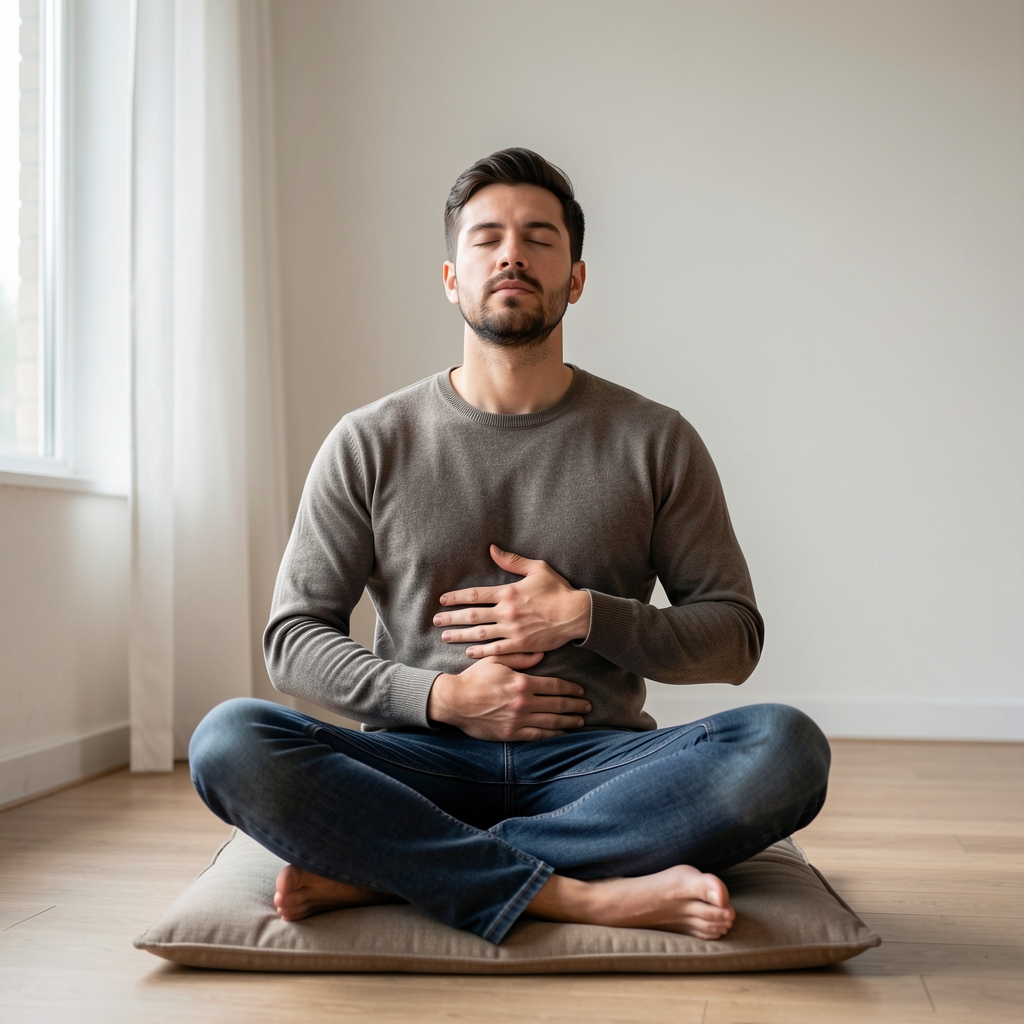
Man seated cross-legged on a cushion with eyes closed and a hand resting on his abdomen in a calm room

Read this first

Breathing exercises are general wellbeing practices and are not a medical therapy. People with asthma, heart or lung conditions, high or low blood pressure, epilepsy or a history of panic episodes, and anyone who is pregnant, should speak with a qualified clinician before trying techniques that change breathing rate or involve breath holds. Stop immediately if lightheadedness, tingling or distress appears, and never practise in water or while driving.

Three ideas

What researchers tend to examine

Rate and rhythm

Slow breathing, often around five to six breaths per minute, has been studied for its association with heart rate variability and subjective calm. Trials are generally small and short, so conclusions remain cautious, and effects differ between participants.

Diaphragm use

Many adults breathe mainly into the upper chest, especially under stress or after long periods seated. Learning to let the lower ribs and abdomen move on inhalation is described as a more relaxed pattern that may feel more efficient during easy exercise.

Nasal breathing

Breathing through the nose filters and warms incoming air and often slows the rate of breathing. Some athletes use it during easy sessions as a pacing cue, while switching to mouth breathing as intensity rises.

Gentle practice

A five-minute seated exercise

The exercise below is an example of a low-intensity routine. It involves no breath holds or forced breathing, and it can be done in a chair.

  1. Settle the posture

    Sit with feet on the floor, spine tall without stiffness and shoulders loose. Rest the hands on the thighs or lap.

  2. Observe for one minute

    Notice the natural breath without changing it. Observation alone helps identify whether breathing is quick, shallow or uneven.

  3. Lengthen the exhale

    Inhale quietly through the nose for about four seconds and exhale softly for about six. Keep the effort small; the breath should never feel strained.

  4. Continue for three minutes

    Allow the rhythm to settle. If attention drifts, return gently to the sensation of air at the nostrils or the movement of the ribs.

  5. Return to normal breathing

    Release the pattern and sit for another minute. Note any change in alertness, then continue the day at an ordinary pace.

Common techniques, described neutrally

Technique Pattern Cautions
Diaphragmatic breathingSlow breaths with lower-rib and abdominal movementFew; avoid forcing the belly outward
Extended exhaleExhale longer than the inhale, for example 4 and 6 secondsStop if breathless or dizzy
Box breathingEqual inhale, pause, exhale, pausePauses should be brief and comfortable
Rapid or breath-hold methodsForceful cycles followed by holdsNot suitable for unsupervised beginners; clinical advice recommended
Man standing beside a lake at dawn taking a slow breath with relaxed shoulders and open posture
In context

Breathing alongside training

Many readers use breathing practice at three points in the day: on waking, before a session to settle attention and after a session to wind down. These are habits rather than treatments, and their value is largely personal.

During exercise itself, breathing follows effort. Trying to control it rigidly can be distracting, so most coaches advise attention to relaxation of the jaw and shoulders, and to comfortable rhythm at easy intensities.

  • Morning: two minutes of slow breathing before screens.
  • Pre-session: a short settling exercise, then a regular warm-up.
  • Evening: a quiet routine that signals the end of the working day.
Key terms

Heart rate variability
The variation in time between heartbeats, studied as one indicator of autonomic nervous system activity.
Tidal volume
The amount of air moved in or out during a single quiet breath.
Respiratory rate
The number of breaths taken per minute, which varies with activity, temperature and stress.
Hyperventilation
Breathing faster or deeper than the body needs, which can cause lightheadedness and tingling.

Further definitions are available in the full glossary.