Mobility: range you can actually use.
By Arif Hakim, Training Editor · Published · Updated
Flexibility describes how far a joint can be moved; mobility describes how well that range is controlled. This page looks at both in everyday terms.
Check the key terms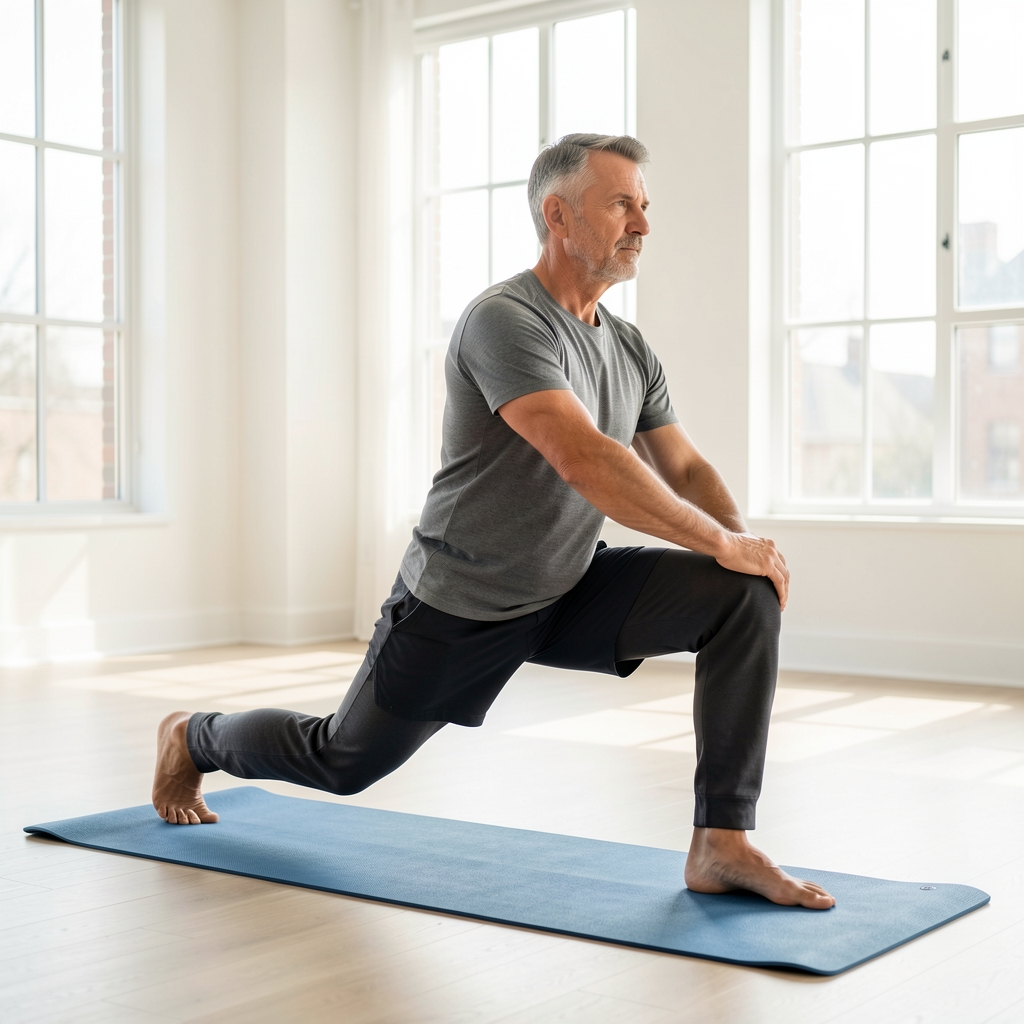
Why movement range tends to narrow
Long hours at a desk, commuting on Jakarta's congested roads and years of repeated sport patterns can leave hips, upper back and ankles with less usable range than they once had. Connective tissue also changes gradually with age, which is one reason warm-ups often take longer than they did in a man's twenties.
Mobility work is not a replacement for strength or aerobic training. It supports them by letting a lifter squat to a comfortable depth, or a runner extend the hip without compensating through the lower back.
The aim is a range that feels stable and unforced, not the largest range possible.
A simple daily sequence
The sequence below is an example of how a short routine might be organised. Movements are done slowly, within comfortable range, with steady breathing.
Neck and shoulder rolls (1 minute)
Small, slow circles release the tension that builds during screen work. Keep the jaw relaxed and the breath unhurried.
Thoracic rotations (2 minutes)
On hands and knees, place one hand behind the head and rotate the upper back open, then return. Five to eight repetitions per side is typical.
Hip flexor lunge hold (2 minutes)
Kneel on a cushion, tuck the pelvis gently and shift forward until a mild stretch appears at the front of the back hip. Hold for 30 to 45 seconds per side.
Deep squat sit (2 minutes)
Hold a stable support and lower into a comfortable squat, shifting weight side to side. Heels may be raised on a folded towel if ankle range is limited.
Ankle rocks (1 minute)
Facing a wall, glide the knee over the toes while the heel stays down. This highlights ankle range, which affects squatting and running.
Hamstring floss (2 minutes)
Lie on the back, loop a strap around the foot and slowly straighten and bend the knee. The movement is gentle and avoids sharp stretching.
Stretching approaches compared
Different stretching methods have different roles. The summary below reflects how they are commonly described in sports science reviews, which generally report small and context-dependent effects.
| Method | Description | Common use |
|---|---|---|
| Dynamic | Controlled movement through range, such as leg swings | Before training as part of a warm-up |
| Static | Holding a lengthened position for 20 to 60 seconds | After training or on separate days |
| Loaded range work | Light weight held at the end of range, as in a goblet squat pause | Building control through new range |
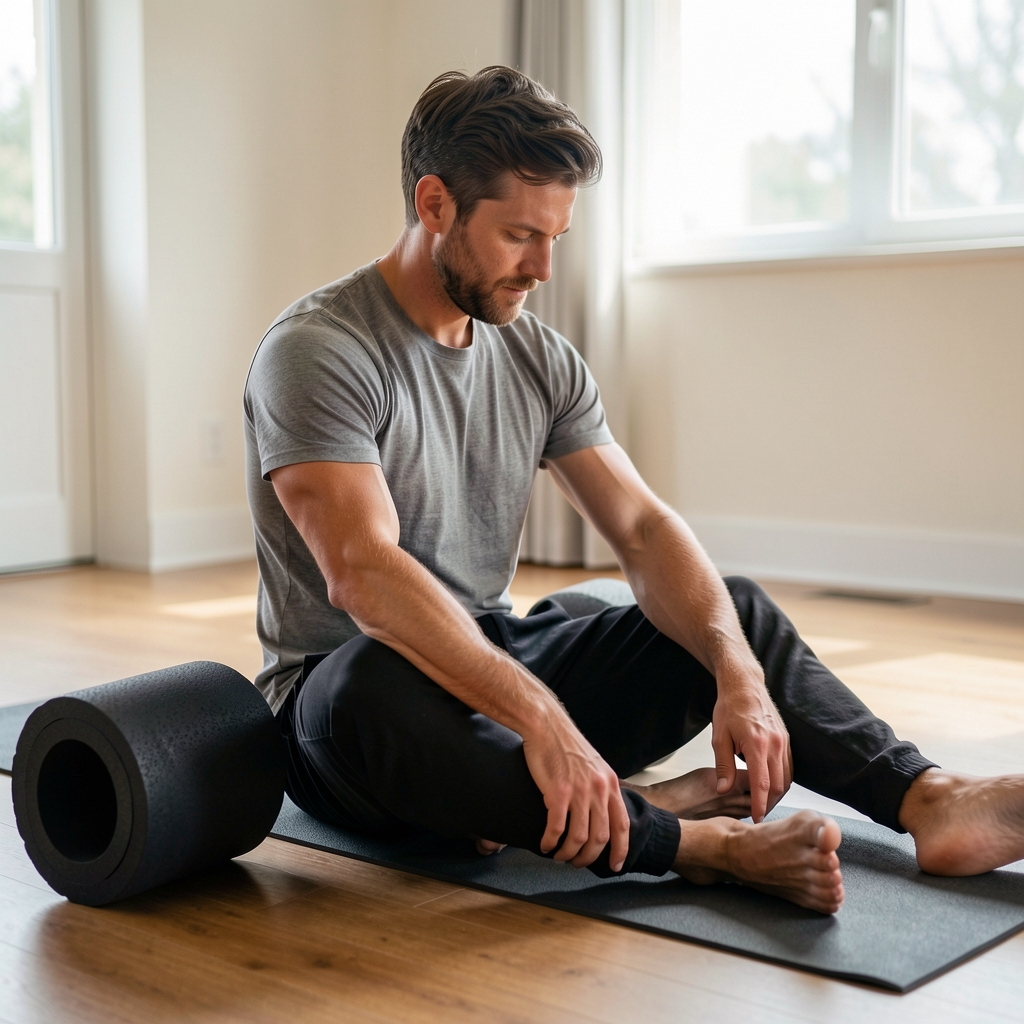
| Self-massage tools | Foam rollers or balls applied to soft tissue | Short-term comfort; evidence for lasting change is limited |
Words used on this page
- Range of motion
- The distance and direction a joint can move, either on its own or with help from outside force.
- Active mobility
- Range a person can reach and control using their own muscles, without support.
- Passive flexibility
- Range reached when an outside force, such as a strap or partner, moves the limb.
- Stretch tolerance
- The ability to accept a lengthened position without the body guarding against it.
Comfort is the boundary
A mild stretching sensation is normal; sharp, pinching or electric pain is not. If a movement produces joint pain, numbness or symptoms that linger after the session, stop and consider an assessment by a physiotherapist or physician. Past injuries, joint replacements and hypermobility each require individual advice that an article cannot provide.
Frequently asked questions
How often should mobility work be done?
Short daily sessions of five to ten minutes are common in the literature on flexibility, though two to three longer sessions per week also show effects. Consistency matters more than duration, so the routine should be small enough to fit a normal day.
Is stretching before a run or lift necessary?
Reviews suggest that long static holds immediately before power or strength efforts may slightly reduce performance in some settings. A dynamic warm-up that rehearses the movements about to be performed is the more common recommendation.
Can mobility work replace strength training?
No. Strength through range is what makes new mobility useful, so the two are usually combined. See the strength page for how load can be introduced gradually.